Social Proof Tactics That Boost Customer Trust

If your testimonials are not converting well, then read on to find how new social proof marketing trends are helping businesses win over potential customers online.
With the overwhelming online competition, businesses today need to find ways on how to stand out and establish trust with modern customers who possess shorter attention spans and increasing reservation.
These days, buyers are exposed to ads and polished brand messaging that make it hard to discern authenticity and alignment. As a result, this instigates increased levels of mistrust of online marketing, prompting customers to look for others’ views rather than merely relying on exaggerated claims.
Social proof marketing bridges the gap between business and the consumers’ desire for a genuine connection.
Let’s uncover how you can utilize social proof marketing techniques to improve the results of your marketing efforts and become a leader in your niche!
The Psychology of Trust
The psychology of trust explores how trust forms and influences human behavior. In marketing, it is a well-known fact that humans trust humans over brands, especially when they are uncertain, and their purchases involve risk.
When real individuals with similar desires and needs share experiences, others can easily see themselves in their journey. This creates a sense of familiarity and validation that disarms skepticism and strengthens reassurance.
The biological and social factors that drive trust stem from group behavior and social cues that humans have learned through life in social groups. Trust was established when certain cues of reliance and safety were activated and nurtured throughout time.
Human beings are wired to instinctively create bonds and trust with other human beings, and respond well to cognitive shortcuts that signal “if many people approve, it’s probably safe.”
Marketers can use the psychology of trust to design social proof campaigns that mimic how humans build and retain trust. By showcasing authentic reviews and testimonials from customers, businesses can help their prospective customers feel understood and confident.
The Most Effective Social Proof Tactics in 2026
Unfortunately, not all social proof is effective. It is important to understand what drives customer purchasing behavior today and stay away from outdated tactics that no longer capture user attention.
The following social proof tactics are the most up-to-date credibility boosters any business can use to stay competitive in today’s online landscape.
Online Reviews & Ratings
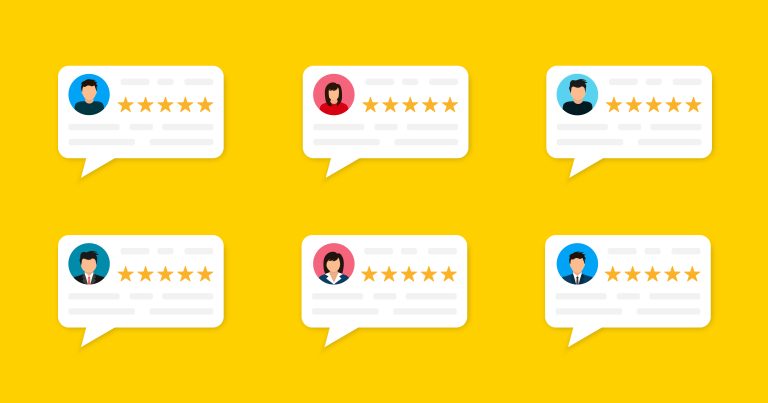
Online reviews are the king of social proof marketing. Simply put, they are the most unbiased reflections of how a company’s products and services resonate with buyers.
Since most public ones live on third-party platforms like Google or Trustpilot, there is a sense of distance from the company and its ability to exaggerate and manipulate, which facilitates a greater sense of transparency and authenticity.
People trust real outcomes, and when just getting to know a brand, online reviews and ratings are the first impression overview of what to expect from the relationship. This is where companies can win or lose warm leads.
However, if companies choose to manage reviews on their own websites, they should be placed where decisions are made, such as product and landing pages. This is a great strategy to reassure customers leap at critical conversion points.
Essentially, online reviews are at the core of branding. The best practice for managing reviews, even negative ones, is to respond to them with a sincere desire to serve and do your best. Authentic accountability highlights care for customer needs and humanizes the brand in a positive way.
User-Generated Content (UGC) as Proof of Experience
User-generated content, or UGC, is the new marketing trend that is gaining the most traction out of all social proof tactics. The reason is because humans are more responsive to visual cues when it comes to trust-building than to words that feel more anonymous.
When you can put a face to words, you simply feel more connected to a message – it becomes personal.
Social posts, videos, and photos that are created organically by users are big on signaling authentic impressions. UGC shows customers who are actively using a product or service and who can dive into real experiences (good, bad, and ugly) to give life to the product features and help potential customers understand all the benefits and pitfalls before commitment.
Overall, embedding UGC on landing pages is known to boost conversion rates by about 29%, making it one of the best strategies businesses can adopt in their social proof marketing.
Testimonials & Case Studies That Show Real Outcomes
Weak testimonials are often vague and don’t capture the imagination of a potential buyer. They will normally include some generic language such as “great service and really enjoyed the product”.
However, good testimonials aim to tell a story of transformation. This includes describing the problem they had, the actions they took to resolve the issue with the help of the business, and the results they got.
This type of storytelling will pull new customers in and give them a real insight into how a business can help different people achieve a certain goal. Case studies take this concept and turn it into a more formalized story with trust indicators such as metrics.
Video testimonials are also a powerful way to combine voice and visual cues for trust-building. You can use visual success stories on landing pages and social media posts to boost credibility, as they capture attention quickly and highlight real experiences.
Essentially, we recommend using storytelling and video as effective social proof tactics to convey authority and establish yourself as trustworthy over general one-line testimonials that have very low conversion power.
Real-Time and Behavioral Social Proof
You can think of real-time behavioral proof as the pop-ups you see on landing pages that let you know how many other people are actively engaging with a product or service at that moment.
For example, if potential customers see that “15 people purchased Y in the last 24 hours,” they would be more confident in placing the order. However, these urgency tactics should be used ethically to guide buyers without pressure.
We find that key trends in social proof marketing all converge on context and personalization. This means that the types of social proof that work best are those that are personalized to each user’s behavior and information. Customization is here to stay, and it’s now more important than ever for businesses to tailor the buyer experience.
How To Use Social Proof Marketing Without Losing Trust
Is there a balance between having a data-driven social proof strategy and trust-building? Yes, there is! We believe that any business that prioritizes authenticity over volume will always come out on top with customer acquisition and loyalty.
Buyers are becoming more adept at spotting fake and exaggerated reviews in marketing, so the best marketing practices should reflect the real-life experiences of existing customers.
This also means never to shy away from criticism. How you approach criticism and what you do about it will speak volumes. Kindness and commitment to continuous improvement always win and paint you as a trustworthy business that cares about its customers.
Social Proof Marketing Experts
Social proof marketing has evolved to reward authentic story-telling from organic users. As B2B marketers who understand trends and how to help our clients be relevant in today’s crowded online space, we create innovative social proof strategies that turn leads into conversions.
If you’re interested in how we can help you reach more customers with social proof testimonials and credibility boosters, reach out to us today!